I Need To Be Sure (Thomas' Song)
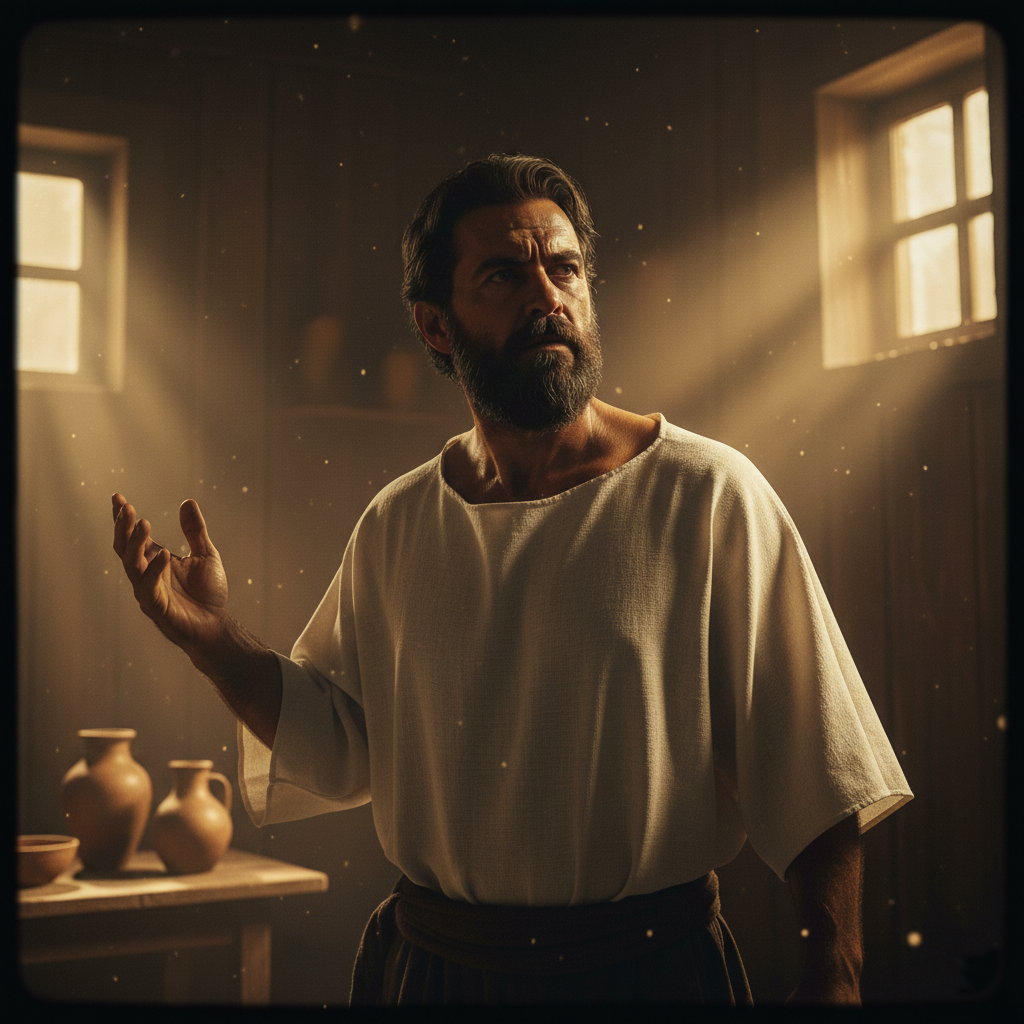
The Story
History has unfairly branded him forever as "Doubting Thomas," but I Need to Be Sure strips away that negative nickname to reveal a man of deep, practical integrity. Thomas was never apathetic or casually cynical. In fact, when Jesus decided to walk back into dangerous territory, it was Thomas who bravely, if fatalistically, said, "Let us also go, that we may die with him." He was fiercely loyal, but he was a realist who demanded solid ground to stand on.
This song places us in the agonizing, suffocating grief of the days following the crucifixion. When the other disciples excitedly claimed Jesus was alive, Thomas refused to accept a secondhand rumor for an event of such massive consequence. To him, the stakes were simply too high for wishful thinking. He needed the physical, undeniable reality of the scars.
The beauty of this encounter is how Jesus responds. He doesn't shame Thomas for his skepticism or scold him for asking the hard questions. Instead, Jesus meets him exactly where he is, offering the very proof he demanded. Thomas reminds us that God is not intimidated by our hardest, most stubborn questions. He invites our honest doubts, knowing they can be the very stepping stones to our deepest faith.
Associated Scripture
John 11:16: "Then Thomas (also known as Didymus) said to the rest of the disciples, 'Let us also go, that we may die with him.'" (Showing his practical, if pessimistic, realism and loyalty).
John 14:5: "Thomas said to him, 'Lord, we don’t know where you are going, so how can we know the way?'" (Showing his consistent refusal to pretend he understood without clear proof of the plan).
John 20:25: "So the other disciples told him, 'We have seen the Lord!' But he said to them, 'Unless I see the nail marks in his hands and put my finger where the nails were, and put my hand into his side, I will not believe.'"
John 20:27-28: "Then he said to Thomas, 'Put your finger here; see my hands. Reach out your hand and put it into my side. Stop doubting and believe.' Thomas said to him, 'My Lord and my God!'"